North America's largest IT Asset Disposition gathering — the ITAD Summit — opens at the Bellagio in Las Vegas on August 4, with more than 2,100 industry professionals attending. Certified data erasure and compliance are central topics every year. But what does "certified erasure" actually mean for a shop that processes phones?
Why certification is the conversation right now
Enterprise clients increasingly require documented, standards-aligned data sanitization. Buyers on platforms like Back Market and eBay Refurbished expect verifiable device history. And regulators across the US, EU, and increasingly APAC are moving from "best effort" to "show me the certificate."
The key word is auditable. Anyone can claim they wiped devices. A certification means an independent body verified how your process works — not just once, but on an ongoing basis.
The standards you'll hear discussed at an ITAD event: NIST SP 800-88, ADISA, and IEEE 2883. Each covers different device types and organizational requirements, but they share a common thread: a single overwrite pass with verification is now considered adequate by modern standards. Physical destruction is a last resort, not a default.
The phone-processing gap
Most certified erasure conversation in ITAD centers on hard drives and enterprise storage. Phones are a different problem. A factory reset is not secure erasure — data remains recoverable. Locked devices, particularly locked Samsung phones, present a specific challenge that most erasure tools sidestep entirely by requiring the device to be unlocked first.
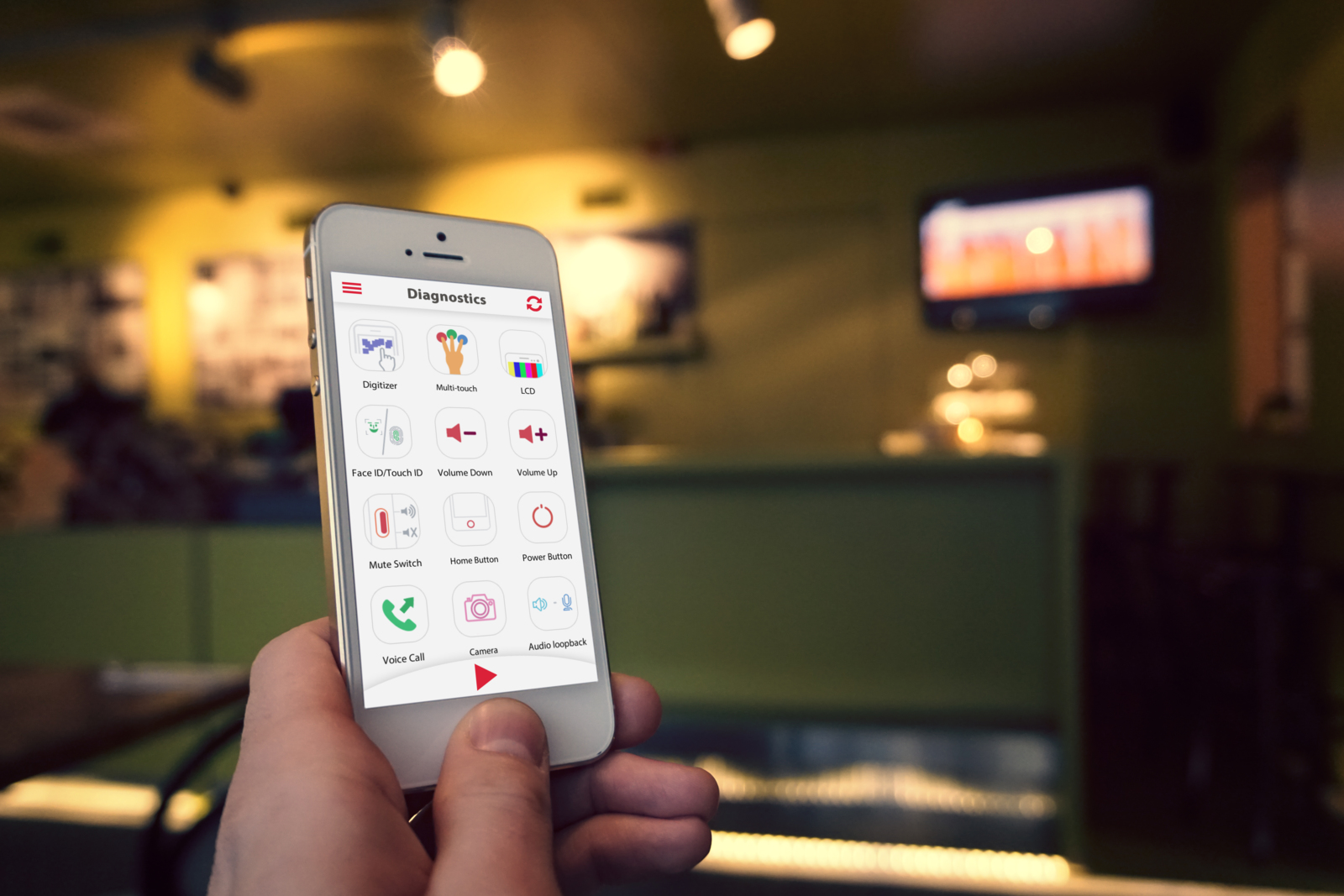
A compliant phone-processing workflow needs to handle the full range of what actually walks in the door: iPhones in various lock states, Android devices at different OS versions, Samsung devices that may be carrier or FRP locked.
What ADISA AAL Level 3 means in practice
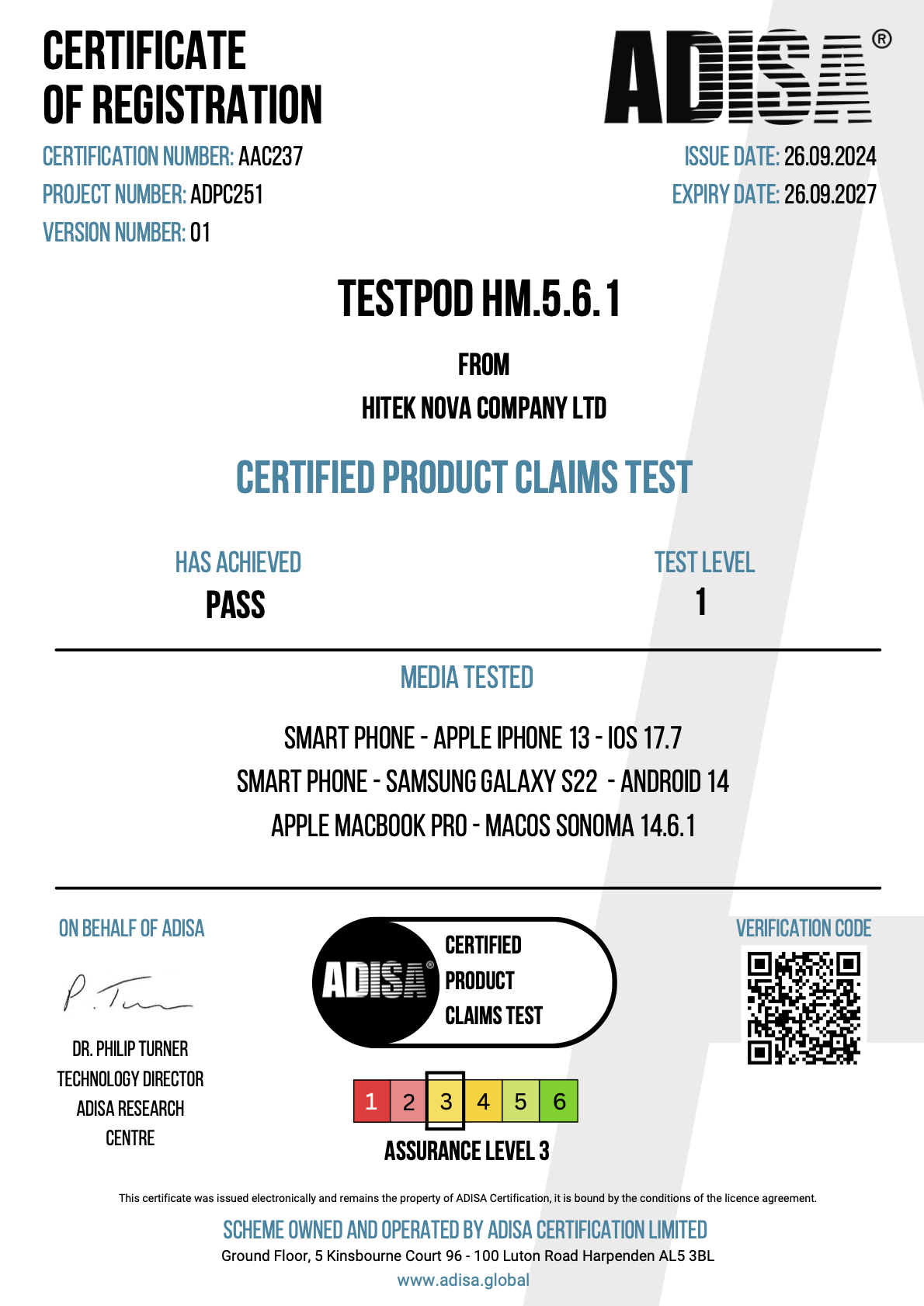
ADISA's Asset Assurance Level 3 certification is the standard that enterprise resellers and corporate IT disposal contracts increasingly specify. It is the same certification tier held by Blancco, one of the largest names in the erasure industry.
testPod holds ADISA AAL Level 3 certification (Certificate ADPC251, valid through September 2027). That means the erasure process was independently audited — not self-certified.
For each device processed through testPod, a cloud-issued Diagnostics & Erasure Certificate is generated and viewable at hiteknova.com/results/[IMEI] or by scanning the label printed at the end of the workflow. That is the audit trail a buyer, client, or regulator can actually verify.
A certified workflow without proprietary hardware
A compliance-ready setup does not require new machines or a proprietary docking station. testPod runs on your existing Windows, macOS, or Linux computers. The platform handles iPhone (iOS), Android, and Mac devices including Apple Silicon — and wipes locked Samsung devices.
An operator can process 40–60 phones per hour with background pipelining: test, grade, wipe, label, and export — all in one workflow, with a per-device certificate generated automatically.
Pricing starts at $30/month per computer, which includes 100 device checks. There is a free 14-day trial, 25 devices, no card required. Support comes directly from the founder — no ticket queue.
Whether you are heading to the ITAD Summit this week or watching the industry conversation from home, certified erasure is worth getting right — not just for compliance, but because it is becoming a baseline requirement for serious buyers.